Welcome to the official website of Nanbei Group


 008615890068607
008615890068607
008615890068607

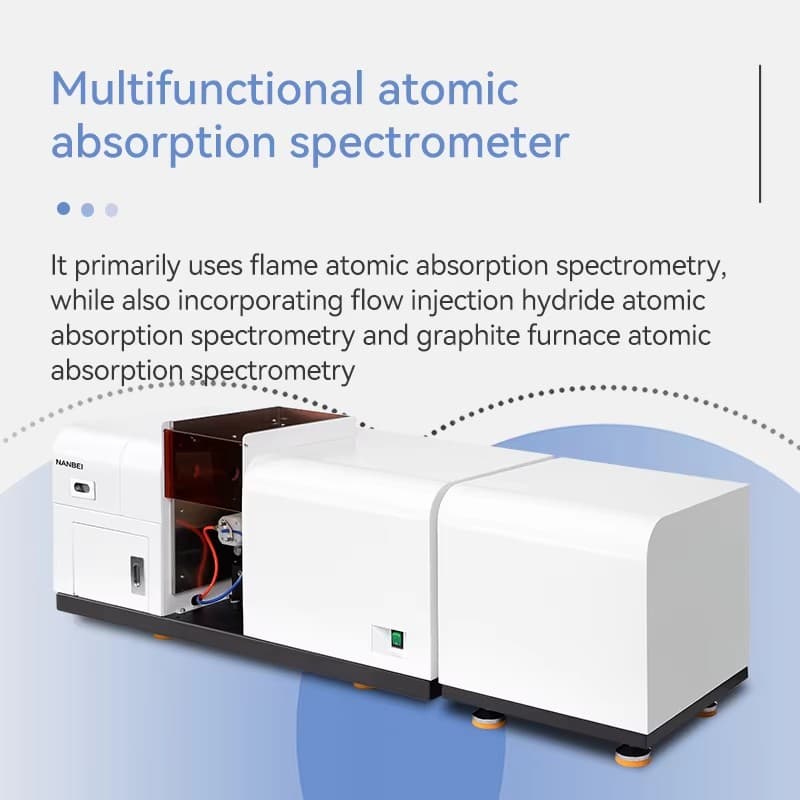
The atomic absorption spectrophotometer is a precision analytical instrument used to determine the content of metal elements in samples. It is widely applied in fields such as environmental monitoring, food testing, chemical production, pharmaceutical research, and geological exploration.
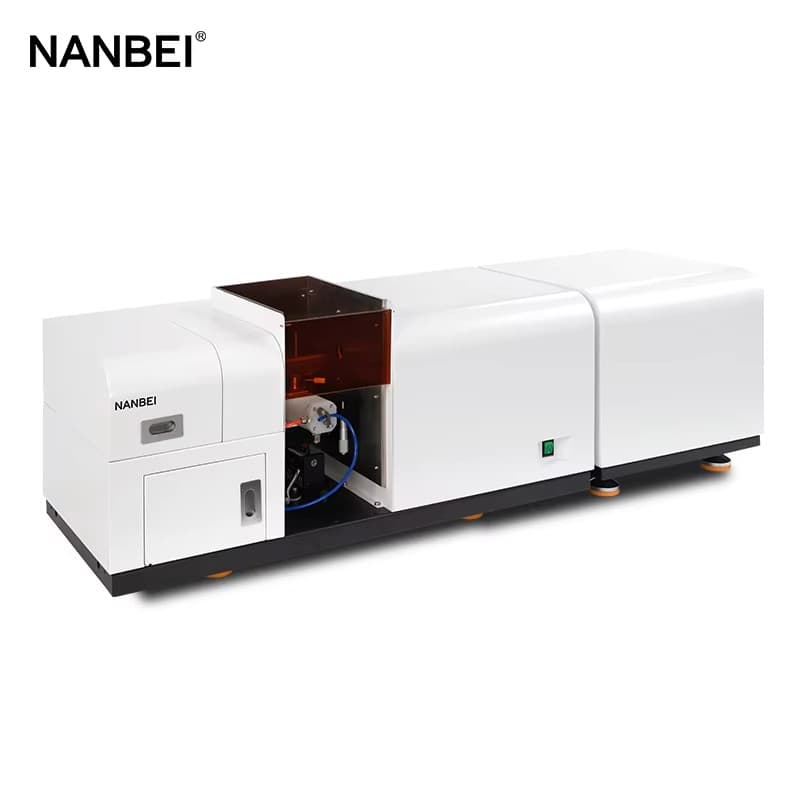
The four major types of interference in atomic absorption spectrometer are:
1. Interference caused by changes in physical factors during sample transfer and evaporation:
This primarily affects the rate at which the sample is aspirated into the flame, the sample uptake rate, nebulization efficiency, atomization efficiency, and droplet size.
2. Interference caused by chemical reactions between the analyte and other components, resulting in the formation of compounds that are difficult to volatilize or dissociate, thereby reducing the number of ground-state atoms:
This primarily affects the atomization efficiency of the analyte and is a major source of interference.
3. Ionization interference:
Certain easily ionized elements undergo ionization in the flame, reducing the number of ground-state atoms and lowering the sensitivity of the determination; this phenomenon is known as ionization interference, and the extent of such interference depends on the flame temperature and the type of element.
4. Spectral interference:
Spectral interference is primarily categorized into two types: spectral line interference and background interference. It mainly originates from the light source and the atomizer.
One-Stop International Laboratory Instrument Supplier, Empowering World-Class Scientific Research
NANBEI INSTRUMENT focuses on the performance of laboratory instruments and keeps instruments professional essence, ensuring continuous innovation with high-precision instruments and improving experimental quality with high-efficiency solutions.
Previous: No Information
Next: The FAI climbed 5.9 percent year-on-year in the first 11

 nanbeiinstrument@nanbei-china.com
 008615890068607
 Add: No. 72, Beihuan Road, Jinshui District, Zhengzhou,China
QR Code

Copyright © NANBEI INSTRUMENT LIMITED